Category: Thermal
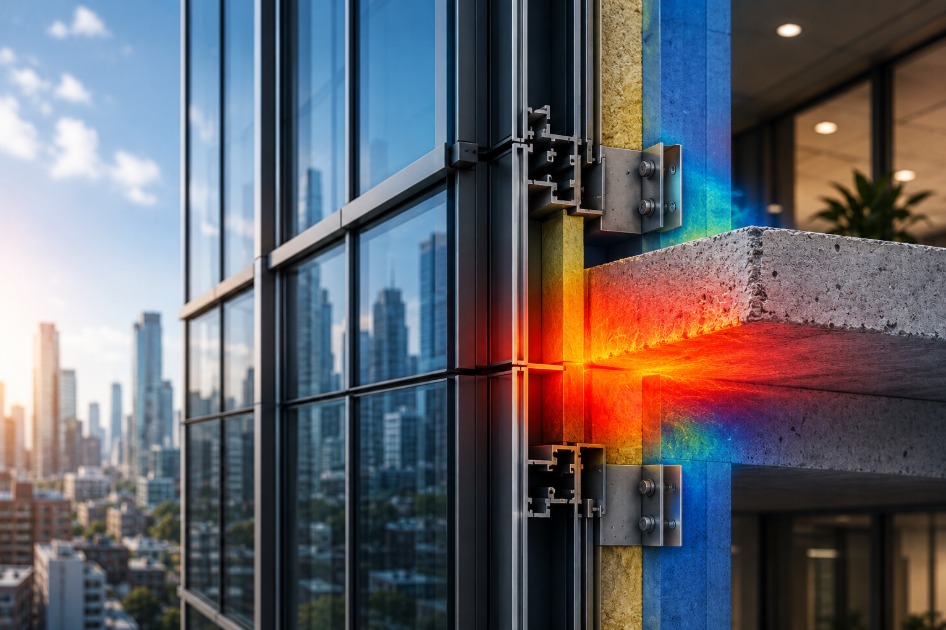
Curtain Wall Interfaces: The Hidden Thermal Bridge at Slab Edges and Anchors
Curtain wall systems are popular in modern buildings for their clean appearance and daylight benefits. However, some parts of the system, such as slab edges and fixing anchors, can become weak points where heat easily passes through the building envelope. As insulation professionals, we generally focus on wall insulation, roof insulation and thermal performance. Yet, […]
Read More +Thermal Breaks in Fasteners: Is the ROI Real in Warm Climates?
“Small Components, Big Impact: Why Fasteners Matter More Than We Think” While insulation, glazing, and roofing often receive the most attention in energy-efficient buildings, fasteners are a frequently overlooked source of heat loss and gain. Metal screws, bolts, anchors, and brackets can create direct heat-transfer paths through insulated assemblies, a phenomenon known as thermal bridging. Thermal-break fasteners are […]
Read More +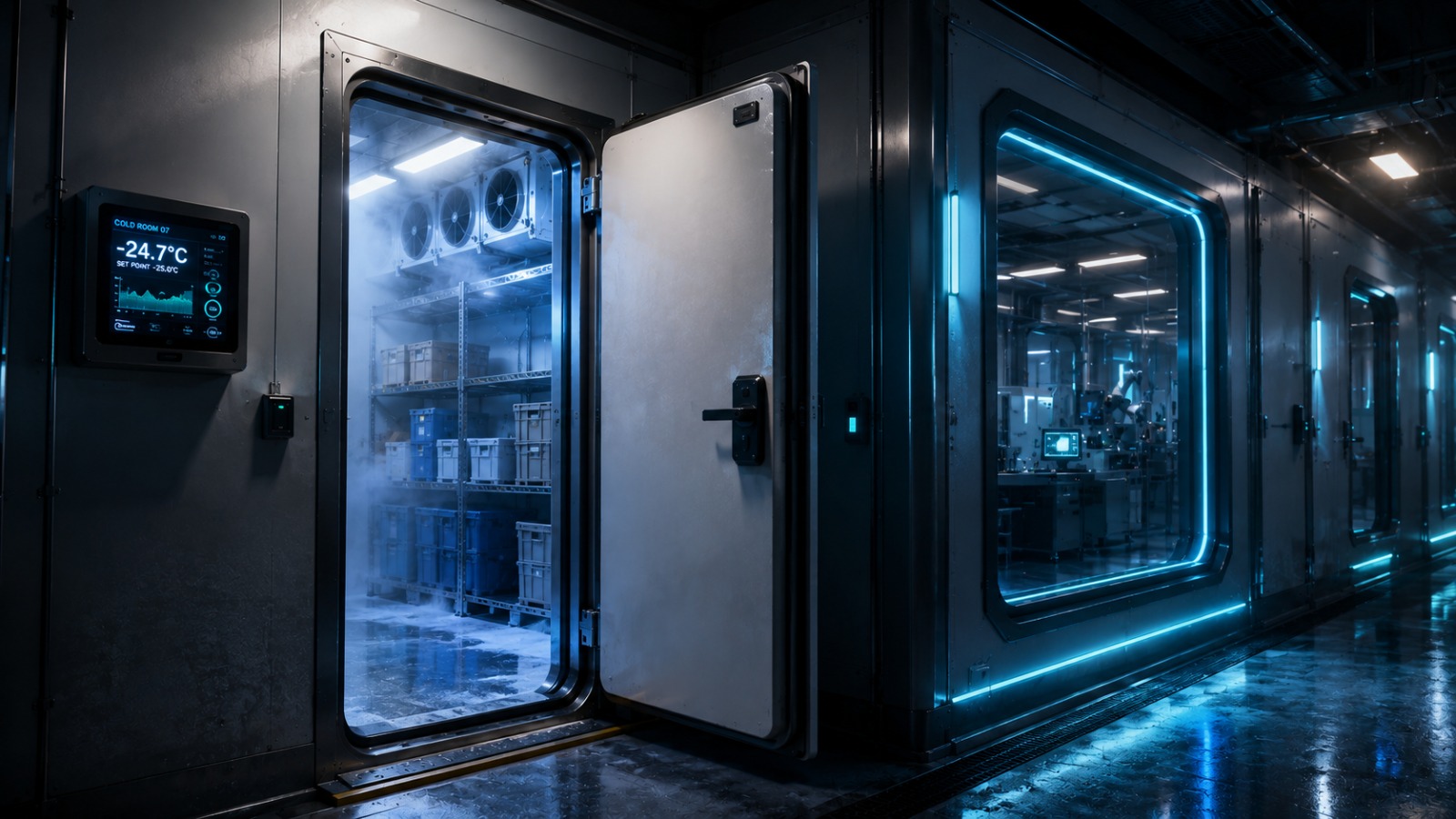
Cold and Clean Rooms: How Doors, Thresholds & Joints affect the efficiency of the Insulation
Walk into a cold storage facility that has been operating flawlessly for ten years, and at first glance, nothing seems remarkable. The refrigeration system hums quietly in the background. Products remain at the required temperature. Floors are dry. Doors open and close smoothly. There is no visible condensation, no ice buildup, and no maintenance team rushing to solve recurring problems. Now […]
Read More +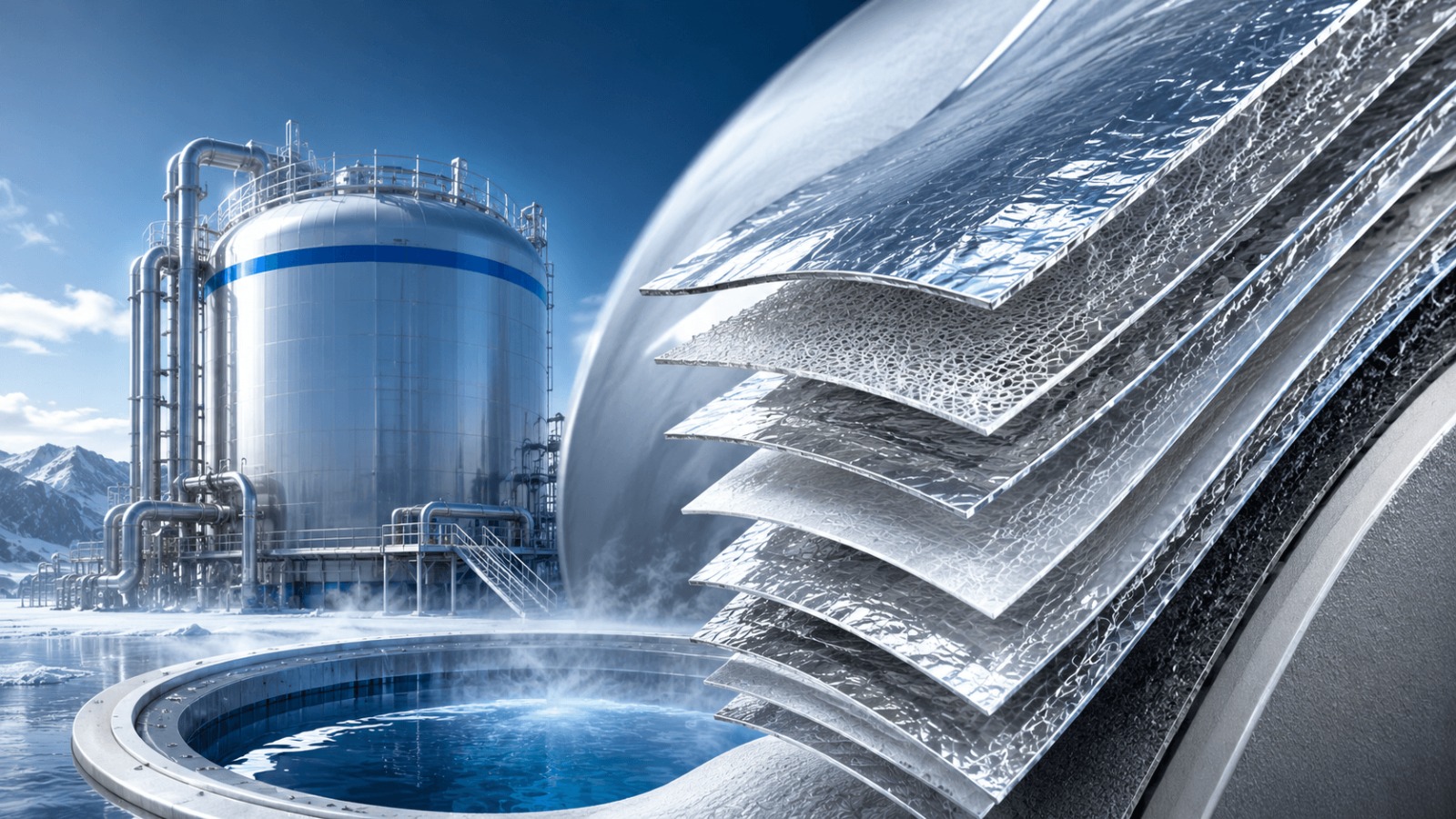
Multilayer Insulation in Cryogenic Systems: Why MLI Wins
Cryogenic systems operate at extremely low temperatures, typically below −150°C. Applications such as liquefied natural gas (LNG), liquid hydrogen (LH₂), liquid oxygen (LOX), liquid nitrogen (LN₂), space vehicles, superconducting equipment, and scientific research facilities rely on efficient thermal insulation to minimize heat ingress. At first glance, it may seem logical that simply increasing the thickness […]
Read More +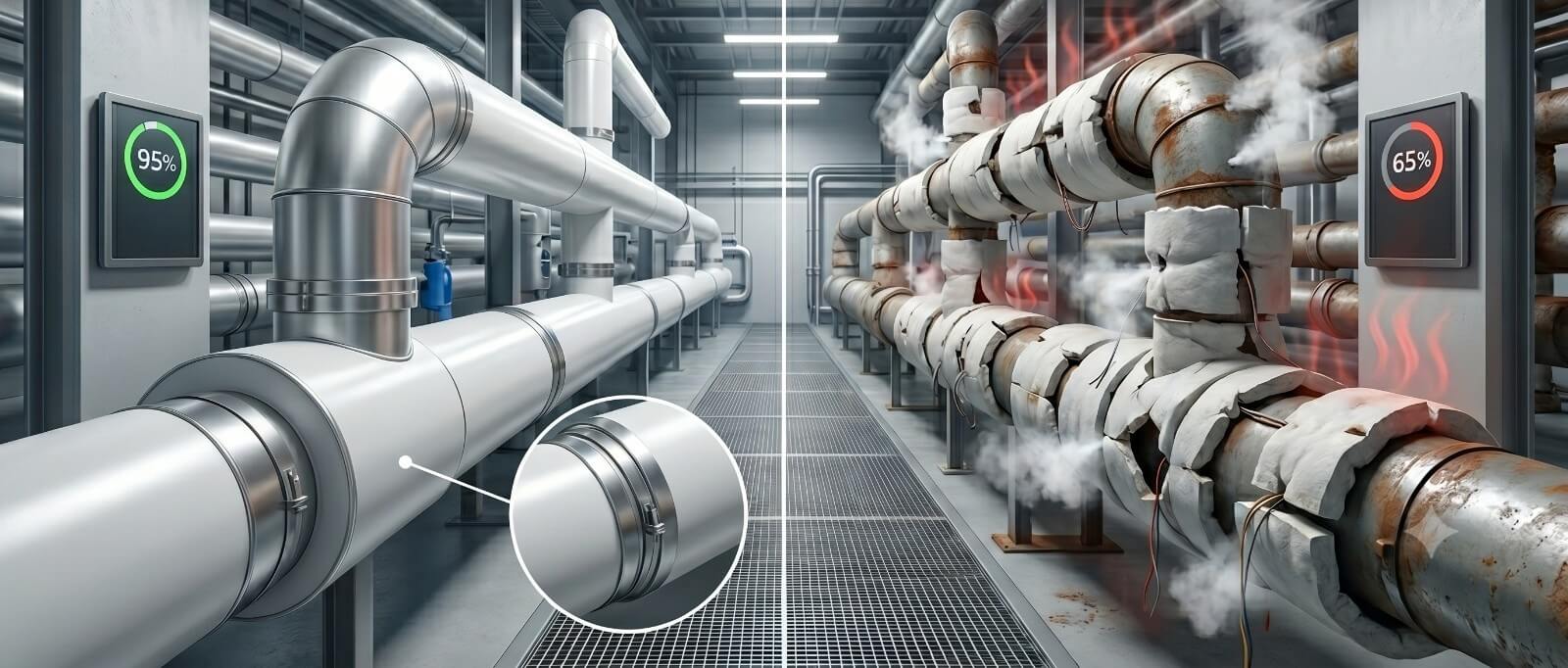
Insulation Efficiency vs Installation Quality – How Gaps Create Thermal Shortcuts
Same insulation material, same thickness, and same design can still give different energy results. The difference is often not the material — it is the installed condition. In fact, thermal shortcuts created during poor installation are one of the most overlooked causes of insulation failure. Insulation starts the saving, but installation quality decides the real […]
Read More +
Thermal Metrics: k-value
Thermal performance is often reduced to a single number. Whether it is an insulation datasheet, an energy model, or a project specification, designers frequently encounter R-value, U-value, and k-value as indicators of performance. While all three are important, each tells only part of the story. The problem begins when one metric is used as a […]
Read More +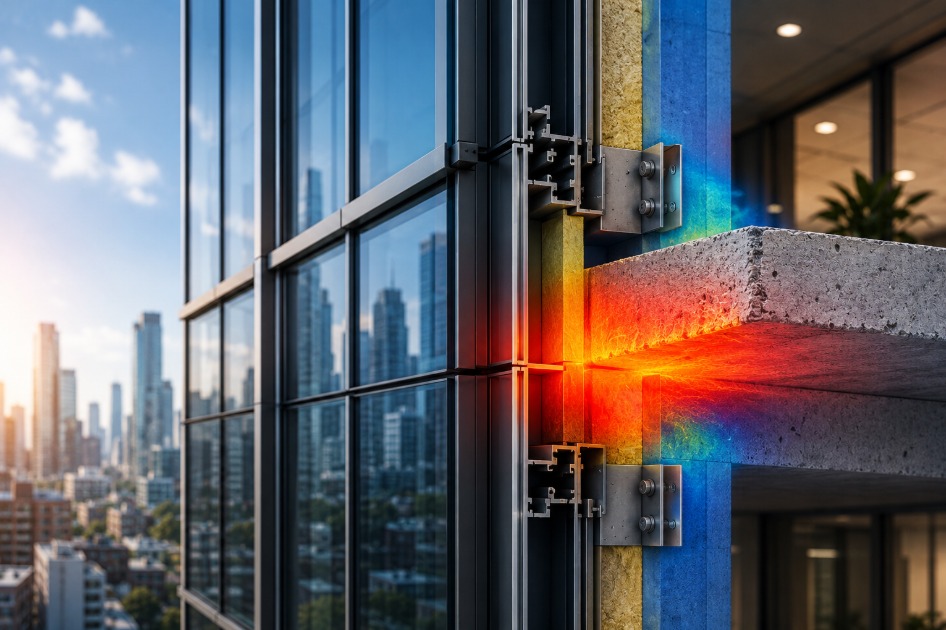
The Hidden Thermal Bridge at Slab Edges and Anchors
This thermal bridge may not be visible during construction, but their effects become evident throughout the building life cycle through higher energy consumption, condensation, occupant discomfort and potential durability during issues. Curtain wall systems are popular in modern buildings for their clean appearance and daylight benefits. However, some parts of the system, such as slab […]
Read More +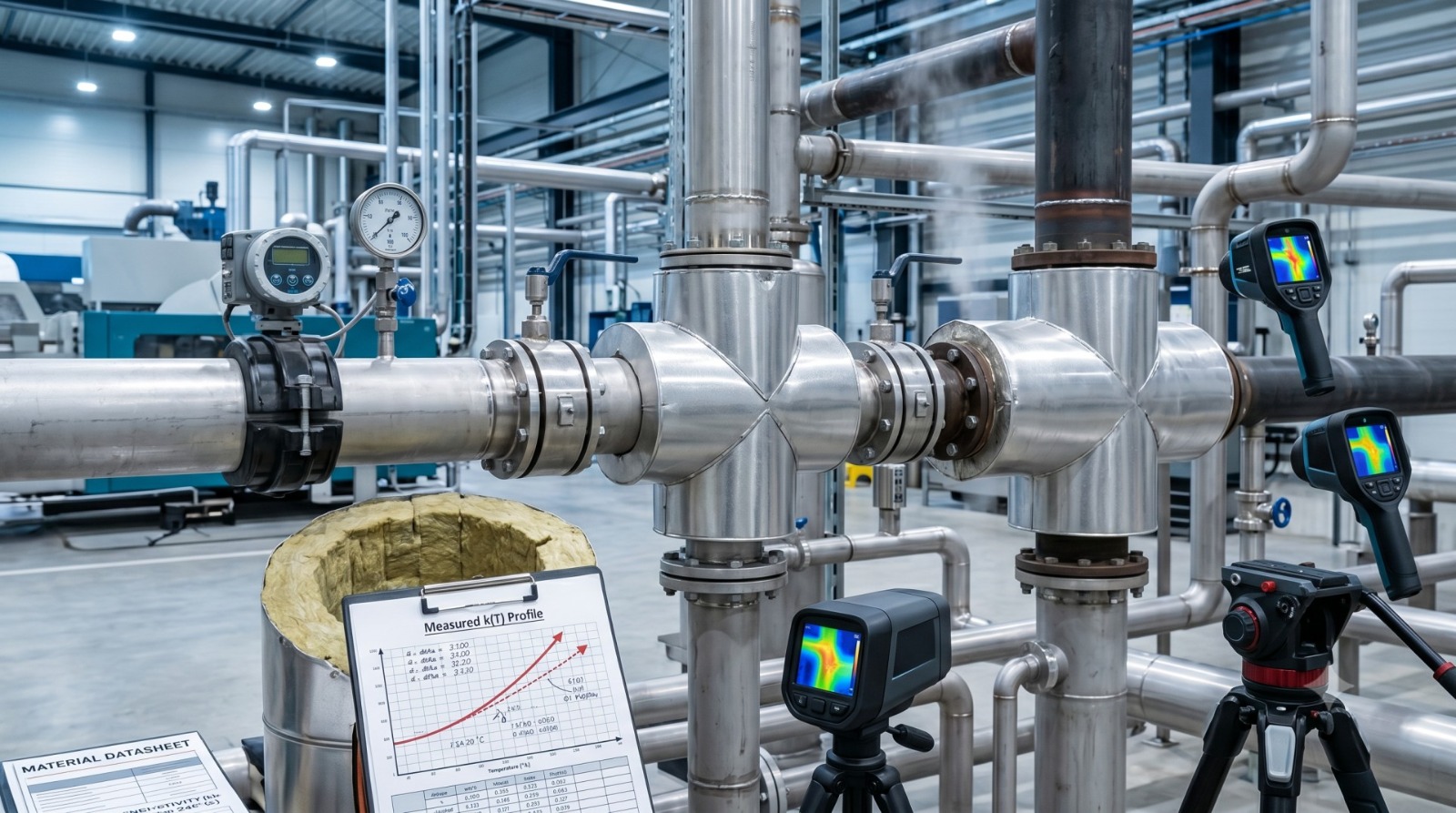
Temperature-Dependent Conductivity: Why k(T) Matters in Thermal Design
When Material Datasheets Can Lead Engineers Astray A material datasheet says thermal conductivity is 200 W/m·K. The calculations look accurate. The thermal simulation passes. The design moves forward. But after installation, temperatures rise higher than expected. What went wrong? The answer often lies in a factor many engineers overlook: temperature dependent conductivity, commonly written as […]
Read More +
The Future of Thermal Insulation in 2035
How many people know the present of thermal insulation? Here we are exploring the future of thermal insulation in 2035. Every year, the world’s temperature is increasing. The main reason behind this is global warming. If this trend continues, temperatures above 45°C may become common in most of the regions by 2035. Figure 1. The […]
Read More +
Critical Insulation Thickness: Myth vs Reality for Hot Pipelines
Is More Insulation Always Better? When it comes to hot pipelines, many people assume that adding more insulation will always reduce heat loss. Surprisingly, this is not always true. Reality For cylindrical systems such as steam lines, hot oil pipelines, and process piping, a phenomenon called Critical Insulation Thickness can occur. At very low insulation thicknesses, adding insulation may increase heat […]
Read More +Recent Blogs