How many people know the present of thermal insulation? Here we are exploring the future of thermal insulation in 2035.
Every year, the world’s temperature is increasing. The main reason behind this is global warming. If this trend continues, temperatures above 45°C may become common in most of the regions by 2035.
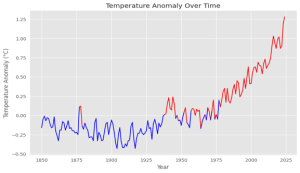
Figure 1. The negative anomaly is marked in blue, while the positive is shown in red. We can clearly see a steady trend of rising temperatures. Data: NOAA. Graph: Earth.Org
As we know, buildings absorb heat throughout the day. Concrete walls and roofs store this heat and slowly release it inside the building, even after the sun goes down. Because of this, indoor temperatures increase and air conditioning systems must work harder to maintain comfort.
Today, many buildings use AHU (Air Handling Unit) systems and air conditioners. In the future, almost every home, office and infrastructure project will depend heavily on cooling systems. At the same time, homes are becoming more furnished and filled with appliances, electronics and other items that generate and retain heat. This means overall energy consumption will continue to rise.
Higher cooling demand directly means higher fuel and electricity consumption. We do not know exactly what energy sources the world will use in 2035, but one thing is clear: energy demand is increasing while natural resources are under pressure. Governments around the world will be forced to focus on energy-saving solutions.
Buildings are one of the largest consumers of energy. Therefore, improving building efficiency will become a major priority. One of the most effective ways to reduce cooling loads is thermal insulation.
I believe that by 2035, thermal insulation will become a compulsory part of construction, just like cement, bricks, steel and other essential building materials. Governments may introduce stricter regulations to ensure that walls, roofs and other building elements meet minimum thermal insulation standards.
As demand increases, the cost of insulation materials may rise significantly. It would not be surprising if insulation costs became 5 to 10 times higher than they are today.
Most insulation materials have a life span of around 20 to 25 years. This means that if you invest in insulation today, you may avoid paying much higher prices in the future. In addition, you will immediately benefit from improved indoor comfort and lower electricity bills due to reduced air-conditioning usage.
Investing in insulation today is not just a smart financial decision; it is becoming a necessity. This is not a marketing statement. It is a practical solution for future energy challenges.
Apart from reducing heat transfer, insulation also contributes to passive fire safety, improves acoustic comfort by reducing outside noise and enhances the overall performance and efficiency of the building.
~ Kartik Ghate
kartik@swaconsultancy.com