Cryogenic systems operate at extremely low temperatures, typically below −150°C. Applications such as liquefied natural gas (LNG), liquid hydrogen (LH₂), liquid oxygen (LOX), liquid nitrogen (LN₂), space vehicles, superconducting equipment, and scientific research facilities rely on efficient thermal insulation to minimize heat ingress.
At first glance, it may seem logical that simply increasing the thickness of a conventional insulation material would provide better thermal protection. However, in cryogenic environments, multilayer insulation (MLI) systems consistently outperform even very thick single-layer insulation materials. Understanding why requires examining the fundamental heat-transfer mechanisms involved.
The Challenge of Cryogenic Insulation
Whenever a cryogenic fluid is stored inside a vessel, heat naturally flows from the warmer surroundings toward the colder interior. This heat transfer occurs through three mechanisms:
- Conduction
- Convection
- Radiation
For cryogenic applications, radiation often becomes the dominant source of heat leak, especially in vacuum-insulated systems. According to NASA’s cryogenics research, managing radiative heat transfer is one of the most critical challenges in spacecraft and propulsion system design. The Department of Energy’s hydrogen storage guidelines similarly highlight MLI as a key technology for liquid hydrogen infrastructure.
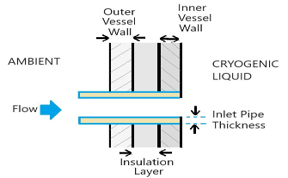
Figure 1: Conduction, Convection, and Radiation pathways
Multilayer insulation consists of multiple thin reflective layers separated by low-conductivity spacer materials. A typical MLI system includes:
- Reflective foil layers (usually aluminized Mylar or Kapton)
- Spacer materials to prevent thermal bridging
- High-vacuum environment
A cryogenic storage vessel may contain anywhere from 20 to over 100 reflective layers. Rather than relying on one thick barrier, multilayer insulation creates numerous thermal resistance barriers that dramatically reduce radiative heat transfer.
Why Multilayer Insulation Systems Perform Better Than Thick Single-Layer Materials
Multilayer insulation systems outperform thicker single-layer insulation in cryogenic applications because they reduce all major modes of heat transfer more effectively. Instead of relying solely on material thickness, MLI uses multiple low-emissivity reflective layers separated by low-conductivity spacers. Each reflective layer blocks thermal radiation, which is the dominant heat transfer mechanism at cryogenic temperatures.
A single thick insulation layer can reduce conductive heat flow but cannot efficiently stop radiative heat transfer. In contrast, an MLI system divides the temperature gradient across many layers, significantly lowering the net radiative heat load. The spacer materials also minimize solid conduction between reflective layers.
As a result, multilayer insulation provides exceptionally high thermal resistance with minimal thickness and weight, making it ideal for liquefied gases such as LNG, liquid hydrogen, liquid oxygen, and liquid nitrogen. This superior performance helps maintain ultra-low temperatures, reduce boil-off losses, improve energy efficiency, and lower operating costs in cryogenic storage and transportation systems.
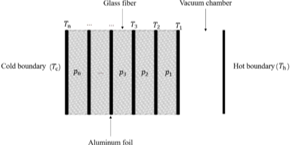
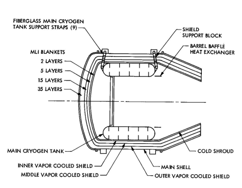
Figure 2 : Reflective layers and spacers in an MLI blanket.
Conclusion
In cryogenic applications, thermal performance is not determined solely by insulation thickness. Because radiative heat transfer dominates at very low temperatures, multilayer insulation systems provide a far more effective solution than simply adding thicker conventional insulation.
By combining reflective barriers, low-conductivity spacers, and high-vacuum environments, MLI dramatically reduces heat ingress, minimizes boil-off losses, lowers operating costs, and enables the efficient storage of cryogenic fluids. This is why modern LNG facilities, liquid hydrogen systems, superconducting equipment, and spacecraft all rely on multilayer insulation rather than excessively thick single-layer insulation.
As cryogenic technologies continue to expand into clean energy, hydrogen infrastructure, and space exploration, multilayer insulation remains one of the most powerful tools available for controlling heat transfer at ultra-low temperatures.
~Saikiran
Research Engineer
saikiran@swaconsultancy.com