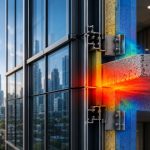
Smart insulation materials are set to transform how we build, heat, and cool our world. As the race toward carbon neutrality accelerates and intelligent infrastructure becomes the norm, one of the most overlooked components of modern design is undergoing a revolutionary transformation. By 2050, insulation will no longer be a silent, passive layer buried behind walls — it will evolve into an intelligent, adaptive system, capable of sensing its environment, responding dynamically, and optimising energy performance with precision.
Welcome to a new era.
The Shift Toward Smart Insulation Technology
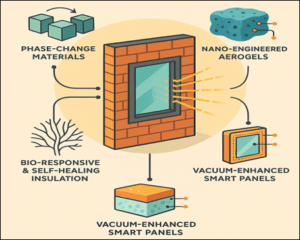
Future insulation must be adaptive, responsive, and sustainably engineered. Innovations in nanotechnology, biotechnology, and artificial intelligence are converging to create solutions that think, sense, and react in real time. By 2050, insulation will act more like a living system than a static construction element.
Emerging Technologies
Environmental and Economic Impact of Smart Insulation
Smart insulation offers benefits that extend well beyond temperature control:
- Supports net-zero and carbon-negative goals
- Reduces dependence on fossil-fuel heating and cooling
- Minimises maintenance through self-diagnosing and self-healing capabilities
- Delivers long-term cost savings through energy optimisation
- Improves indoor comfort and environmental stability
These advantages make smart insulation a critical investment for developers, architects, and sustainability teams alike.
Looking Ahead: Insulation as Intelligent Skin
By 2050, smart insulation will evolve into a dynamic, intelligent skin — a protective layer that breathes, senses, and adapts. Whether in next-generation smart cities, carbon-neutral factories, autonomous vehicles, or off-planet habitats on Mars, it will redefine how humans manage heat, cold, and energy itself.
The future of insulation is not just efficient — it’s alive, adaptive, and central to global sustainability.
~Sai Kiran