Thermal performance is often reduced to a single number. Whether it is an insulation datasheet, an energy model, or a project specification, designers frequently encounter R-value, U-value, and k-value as indicators of performance. While all three are important, each tells only part of the story.
The problem begins when one metric is used as a substitute for another. This can create a gap between expected performance and actual results, leading to higher energy consumption, thermal discomfort, or unexpected condensation issues.
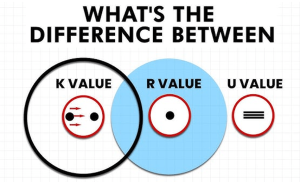
The k-Value Myth: A Better Material Is Not Always a Better Solution
k-value, or thermal conductivity, is commonly used to compare insulation materials. A lower k-value generally indicates a material that slows heat transfer more effectively.
However, k-value describes only the material itself. It does not reflect insulation thickness, installation quality, or the performance of the complete system. As a result, a product may appear superior on paper while delivering less than expected performance in practice.
The R-Value Trap: When Numbers Look Better Than Reality
R-value measures the thermal resistance of an insulation layer. Higher values are often interpreted as better performance, making R-value a popular comparison tool.
The challenge is that R-value is strongly influenced by thickness and does not account for thermal bridges, fixings, supports, or construction details. Consequently, the published resistance of an insulation layer may not represent the performance of the installed assembly.
The U-Value Assumption: Design Performance vs Actual Performance
U-value is often regarded as the most representative thermal metric because it evaluates heat transfer through the complete assembly.
Yet even U-values can be misleading when based on ideal conditions. Thermal bridges, installation tolerances, and construction details can significantly affect actual performance. A building or system may achieve its calculated U-value on paper while performing differently in operation.
The Real Risk: Relying on One Number
The most common design mistake is not misunderstanding R-value, U-value, or k-value individually, it is relying on a single metric to define overall performance.
- A low k-value does not guarantee system efficiency.
- A high R-value does not guarantee real-world performance.
- A low U-value does not always reflect actual operating conditions.
Each metric provides a different perspective, but none tells the complete story on its own.
Looking Beyond the Numbers
R value, U value, and k value are valuable tools for evaluating thermal performance, but they should never be viewed as standalone measures of success. A single metric can highlight one aspect of performance while overlooking factors that significantly influence how a system behaves.
The most effective designs are achieved when these metrics are understood in context. For insulation professionals, the key is not simply knowing the numbers but understanding the limitations behind them.
Balram Patidar
Associate Engineer
balram@swaconsultancy.com