In today’s industrial world, efficiency is no longer optional, it is strategic. Rising fuel prices, carbon regulations, ESG commitments, and competitive pressures are forcing industries to look inward and optimize every aspect of operations. Yet one of the most overlooked opportunities for improvement lies quietly across pipelines, vessels, boilers and process equipment.
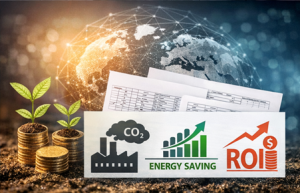
An Audit is not just a routine inspection. It is a structured, data-driven process that reveals hidden losses, improves safety, reduces emissions and unlocks measurable financial returns. When it comes to thermal insulation, the impact is continuous because insulation influences energy consumption 24/7.
Understanding the Purpose of an Audit
An effective audit begins with clarity. Why is the plant conducting it?
- To reduce energy consumption?
- To cut fuel costs?
- To lower CO₂ emissions?
- To upgrade aging insulation?
- To improve safety and surface temperature compliance?
- To plan a retrofit project?
Without defining the objective, an audit becomes a checklist exercise. With clear intent, it becomes a strategic tool.
The On-Site Audit: Making the Invisible Visible
Once on-site, the audit becomes a technical investigation.
The first activity is a detailed discussion with plant engineers and technical personnel. Drawings rarely tell the full story. Operating conditions may vary from design conditions. Some lines may be idle. Others may operate occasionally. Understanding real-time process conditions ensures realistic analysis.
Many plants conduct inspections. Few conduct structured audits.
- An inspection may identify visible damage.
- An audit quantifies invisible loss.
Thermal insulation may not be a moving component, but it directly influences operating cost, carbon footprint and safety every single day. Ignoring it means accepting silent energy leakage year after year.
A professional Thermal Insulation Audit transforms that silent loss into measurable opportunity.
Because sometimes, the biggest improvements are not about adding new equipment
but about optimizing what is already there.
Insights from my recent Audit
- Plants that maintain updated drawings and insulation records enable faster, more accurate audits.
- Insulation should be part of preventive maintenance planning, not just a project activity.
- Optimization must be zone-specific.
- Without structured calculation, heat loss remains invisible.
~ Kartik Ghate